
V4 Expressive Avatars: The Evolution of Emotionally Intelligent AI Communication
Key Takeaways
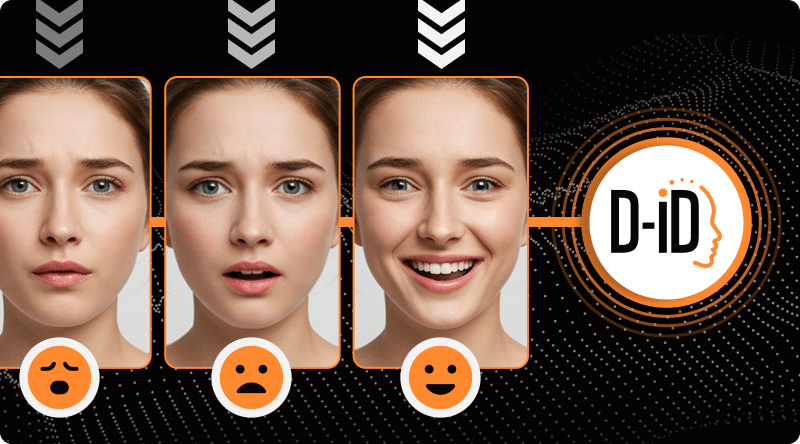
- The Innovation: V4 Expressive Avatars are trained on real human performances, moving beyond synthetic animation.
- The Impact: They align vocal tone, facial expressions, and body language with emotional intent.
- Versatility: Supports both high-quality pre-recorded video and very soon, also low-latency, real-time conversational AI.
- Business Value: Enhances trust and engagement in Customer Support, L&D, and Marketing
Digital avatars have been part of business communication for the last several years. They helped scale explanations, standardize messaging, and automate simple interactions. But despite their realistic appearance, something was usually missing. The delivery felt flat. The voice lacked nuance. As soon as empathy, authority, or emotional timing mattered, avatars stopped feeling human.
That is now changing.
V4 Expressive Avatars combine highly realistic visuals with emotionally adaptive voices and context-aware sentiment. Facial expression, tone, and timing work together. Messages sound calmer when reassurance is needed, more confident when authority matters, and more energetic when enthusiasm is appropriate, both in videos and soon also in live, conversational environments.
Why Emotional Intent Drives Business ROI
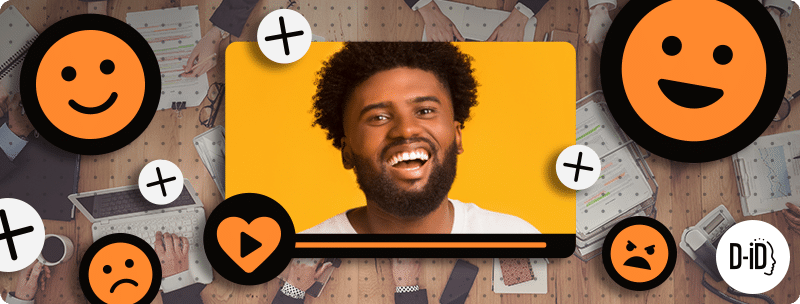
People have become more sensitive to how messages are delivered, not just to what is being said.
Customers reach out when something matters to them. They expect to be understood, not processed. Employees engage with training only when it feels relevant and respectful of their time. Prospects quickly tune out when messages sound generic or scripted.
When an avatar moves naturally, the viewer’s brain doesn’t have to work overtime to “filter out” the robotic glitches. This allows the user to focus entirely on the information being presented.
A support response that sounds neutral when frustration is high often escalates the situation. A leadership message delivered without presence can feel distant or unconvincing. Even a positive tone can backfire if it feels out of place.
Human communicators adjust instinctively. People slow down, soften their voice, or emphasize certainty depending on the moment. Traditional digital avatars could not do this. They delivered content, but not intent.
This is where expressive avatars become important.
Expressive avatars are designed to align facial expression, posture, and voice with the emotional intent of a message.
- They can communicate calmly when reassurance is needed
- Confidently, when authority matters
- Amicably, when vibes are flowing
- And energetically, when motivation is the goal.
For businesses, this means messages land more clearly, interactions feel more natural, and communication scales without losing credibility. Instead of sounding automated, communication feels deliberate and appropriate to the situation.

What Makes V4 Expressive Avatars Different
To understand why V4 is a breakthrough, we must look at the fundamental change in how these digital humans are engineered. Traditional systems often rely on “procedural animation”, mathematical rules that tell a mouth how to move based on phonemes. V4 moves to a Performance-Driven Architecture.
Expression Based on Real Human Performance
Instead of generating expressions synthetically, D-ID built the V4 model using extensive libraries of real human actors. Professional performers were captured in high resolution while expressing a vast spectrum of emotional states. The AI doesn’t just “guess” what an excited face looks like; it mirrors the subtle muscle movements, eye-blink frequencies, and head tilts recorded from real humans. This makes the movement controlled, believable, and recognizable to our biological “trust sensors.”
Natural Timing and Lip Sync
Timing plays a critical role in trust. Even small mismatches between speech and facial movement are immediately noticeable. V4 Expressive Avatars keep speech, lip movement, and facial expression closely aligned, including in live interactions. When timing feels right, attention stays on the message rather than the technology.
Voice and Visuals Developed Together
Each avatar is paired with a voice model designed to adjust tone based on context. Facial expression and vocal delivery evolve together. This avoids the disconnect that often occurred when visuals and voice were developed separately.
One Expressive Model for Video and Real-Time Use
The same expressive foundation supports scripted video production and will soon also support real-time conversational agents. This allows organizations to use a consistent digital presence across marketing, training, internal communication, and customer-facing scenarios without compromising quality.
The result is a system that scales while staying close to real human behavior.
How Expressive Avatars Are Used
Creating Expressive Avatar Videos
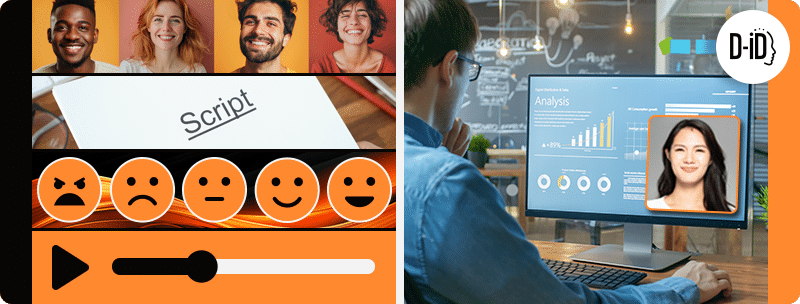
The video workflow is designed to stay simple:
- Choose an expressive avatar (stock or custom)
- Add your script
- Assign emotional tone per scene if needed
- Generate a video where expression and voice follow intent
Watch this video to gain a better understanding of the workflow:
COMING SOON Running Real-Time Avatar Agents
In live applications, expressive avatars are embedded directly into customer support systems, onboarding tools, or internal platforms.
A conversational AI determines the appropriate emotional tone based on context. The avatar adapts in real time, switching naturally between listening and speaking with low latency.
Developers can fine-tune or override behavior using SDK or API controls when precise governance is required.

Top Business Applications for Emotionally Intelligent Avatars
The following use cases show where expressive delivery improves clarity, reduces friction, and helps digital communication feel more intentional and human.
Learning and Development
Onboarding for customer-facing roles
The V4 advantage: An expressive avatar agent plays the role of a customer who starts the conversation in a frustrated state. Trainees respond by choosing options or typing a reply. Clear and respectful answers move the agent toward a friendly delivery, while weak responses keep it frustrated.
This allows new hires to practice real situations repeatedly without risk.
Marketing & Sales
Product explainer video
The V4 advantage: An expressive avatar is used in a short product explainer on the company website. The avatar delivers the message in an excited but controlled tone to introduce a new feature and explain its main benefit in under two minutes.
The video is reused across landing pages and regional versions, keeping the delivery consistent while adapting language.
Internal and Leadership Communication
Company update video
The V4 advantage: Leadership shares a quarterly update using an expressive avatar with a professional delivery. The video is published in the intranet so all employees receive the same message with the same tone, regardless of location.
This ensures consistency while keeping communication clear and focused.
Customer Support
Interactive troubleshooting agent
The V4 advantage: An expressive avatar agent guides users through basic troubleshooting steps for known issues. The agent starts with a professional delivery. If users repeatedly indicate that steps did not work, the tone becomes more friendly and supportive, before offering escalation to human support.

Why Expressive Avatars Matter Now: Scaling Without Flattening
The launch of V4 Expressive Avatars marks a definitive shift in the digital landscape. We have moved past the era of “digital puppets” and entered the age of AI-driven presence. For the first time, digital humans can align expression, voice, and intent in a way that the human brain intuitively understands and trusts.
This matters because, in 2026, modern business communication happens at an unprecedented scale, yet trust is still built one interaction at a time. Whether it is a sensitive leadership update, a high-stakes sales pitch, or a critical support ticket, a message only works if it feels appropriate to the moment. Expressive avatars make it possible to scale this communication without “flattening” the emotional resonance that makes it effective.
Extending the Human Reach
It is important to clarify: V4 Expressive Avatars are not designed to replace human interaction. Instead, they extend it. They offer a way to communicate reliably, consistently, and with far more brand control than human-led video production alone could ever sustain. By grounding every movement in real human performance, D-ID has effectively closed the gap between automation and authenticity.
The Missing Piece of the Digital Puzzle
If previous iterations of digital humans felt “almost right,” V4 is the missing piece you have been waiting for. For those new to the ecosystem, V4 provides an accessible, high-fidelity entry point that requires no technical compromise.
Ready to Humanize Your Digital Presence?
Whether you are looking to create your first expressive video or deploy thousands of real-time agents, the era of robotic AI is over.
[Start creating] – Experience our expressive avatars in the D-ID Studio today.

FAQs
-
Expressive avatars are digital humans designed to align facial expression, voice, and timing with the emotional intent of a message. Unlike traditional avatars that deliver content in a neutral way, expressive avatars adapt how they speak and look based on context, making communication feel more natural and human.
-
V4 Expressive Avatars are built on recordings of real human performances rather than predefined animation rules. This allows them to display controlled, believable expression, natural timing, and emotionally adaptive voice delivery—both in pre-recorded videos and very soon, in real-time interactions.
-
Emotional accuracy refers to the ability of a digital human to match tone, facial expression, and delivery to the intent of a message. This includes sounding calm when reassurance is needed, confident when authority matters, and energetic when motivation is the goal, without overacting or feeling artificial.
-
Expressive avatars are especially effective in scenarios where tone and trust matter, such as onboarding and training, leadership communication, marketing and product explanations, and customer support. In these contexts, emotionally appropriate delivery improves clarity, engagement, and credibility.
-
No. Expressive avatars are designed to extend human communication, not replace it. They help organizations scale consistent, emotionally appropriate messaging while keeping human teams focused on complex, high-value interactions.
-
Teams can start immediately using expressive stock avatars available on supported plans. Enterprise customers can also create custom avatars and voices for stronger brand alignment, governance, and long-term scalability.
-
V4 Expressive Avatars are built for reliability, scale, and control. They support centralized governance, consistent brand delivery, low-latency performance, and enterprise-grade infrastructure, making them suitable for real-world deployments beyond simple demonstrations.
-
Yes. The same expressive avatar model can be used across internal communication, training, leadership updates, marketing content, and customer-facing support, ensuring a consistent digital presence across all channels.
Was this post useful?
Thank you for your feedback!